
Joy of writing sex | Reviews
Elizabeth Benedict
Souvenir Press 2002 236 pages
|
‘Anyone who attempts to render sexual experience directly must face the fact that the writings which comprise it are ludicrous without their subjective content.’
'once you start to think about it in that way, a sex scene in a novel can never simply be a physical act ever again.'
'This is not a how-to-write guide in the classic sense'
'her book should be required reading for anyone who professes an interest in fiction.' |
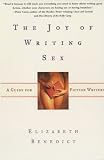
I’ll start with a quotation from William Gass’s On Being Blue: ‘Anyone who attempts to render sexual experience directly must face the fact that the writings which comprise it are ludicrous without their subjective content.’ Remember that; it’s an excellent one-line summation of this book. Why, asks Elizabeth Benedict, is it so difficult to write about sex? To which she might have added, and why is so much of what’s written about sex so totally dreadful? Mainly, it’s because people think they already know what’s involved. You put this in there, describe the reaction, and hey, there you go! Was it good for you too? Possibly, but that’s pornography, in which no anatomical detail is spared, and the sex is always very, very good. Out in the real world, fictional or otherwise, sex is beset by contradictory attitudes and a host of different values. Writers are people too; they’re not immune from feeling anxiety and embarrassment about getting their characters into bed, never mind about what those characters are going to do once the writer gets them there. For some it’s a matter of language and literary choice – so what exactly are you going to call it, then? What words are you going to use to describe … the Act? For others, there are deeper, more personal issues at stake. Sexual behaviour is a complicated subject and so are our responses to it. Having read more than my fair share of extraordinarily mechanical sex scenes – biologically impeccable but extremely unexciting – I was very curious to see what Elizabeth Benedict was going to say. Would this be a step-by-step account of writing the perfect erotic sex scene? Absolutely not. If you want a manual on writing pornography, you must needs go elsewhere. This book is altogether much more thoughtful, and to my mind all the more fascinating for that. Benedict began her research by interviewing a number of writers whose work included, in her judgement, interesting writing about sex. That’s not ‘good’ sex, but sex in all its variety, good, bad and indifferent. Because writing a sex scene is not about anatomy, but about the characters involved, about their needs and desires, their inner lives, their outer lives, their ongoing circumstances, and how their encounters reflect this. And once you start to think about it in that way, a sex scene in a novel can never simply be a physical act ever again. It carries an intense fictional weight; a sexual encounter may be the key to the entire story. And this is what the authors she interviewed said, the same thing in many different ways. They’re all of them clear that they write about sex the way they do for specific reasons which are utterly germane to the novel, and not just for abstract titillation. And this careful thought on their part is reflected in Benedict’s discussion of the subject. Benedict is not offering formulae or rules, though she does offer some general principles about writing sex scenes, not the least of which is that you need to care about the characters involved in order to care about their sex lives as well. You need to know to write that scene from within the characters’ skins as much as you would any other scene in the novel, and that includes consideration of dialogue and surroundings. This is an issue-led book, and without doubt, the biggest issue is ‘safe sex’, especially in the post-AIDS world. Benedict shows how this one fact shapes every sexual encounter, how it affects conversation and action, and also draws a distinction between heterosexual and homosexual sex scenes, examining the differences in attitude within and without the specific communities. Benedict also looks at other specific sexual encounters – the first sexual encounter, the honeymoon, husband-wife relationships, the adulterous affair, solo sex, and even sex on the phone – and considers the intellectual and emotional factors in play, all the while drawing heavily on examples from modern and classic novels to illustrate the points she’s making. This is not a how-to-write guide in the classic sense, and in this particular situation, writing by numbers is definitely not what it’s about, but it’s a book that will make you think about what you’re doing when you write a sex scene – and you’ll never read one in the same way again either. Benedict writes absorbingly about a difficult topic and her book should be required reading for anyone who professes an interest in fiction.
|
© Maureen Kincaid Speller a reviewer, writer, editor and former librarian, is our book reviewer and also works for WritersServices as a freelance editor. 2002 a reviewer, writer, editor and former librarian, is our book reviewer and also works for WritersServices as a freelance editor. 2002 |
Reviewed by Maureen Kincaid Speller |
Related Items in our Amazon Store
List price: £9.99
Publisher: Souvenir Press Ltd
2002-06-13
Paperback
Sales rank: 52,014
|

